Canada
 United States
 France
A successful buffet is a small piece of event design. Guests need to understand where to begin, what they are choosing, and how to return to their seats. Thinking through that journey is more useful than simply adding more dishes to the table.
Walk the route as a guest
Start at the entrance and follow the proposed food route. Can someone carrying a plate move comfortably? Is there room for a guest who needs extra assistance? Does the queue block access to seating or drinks? Draw the route on the room plan and ask the venue to review it.
Decide whether a second serving point would help. This is a question for the caterer and venue, not a rule based only on guest count. The shape of the room and the service period matter too.
Give each dish a different role
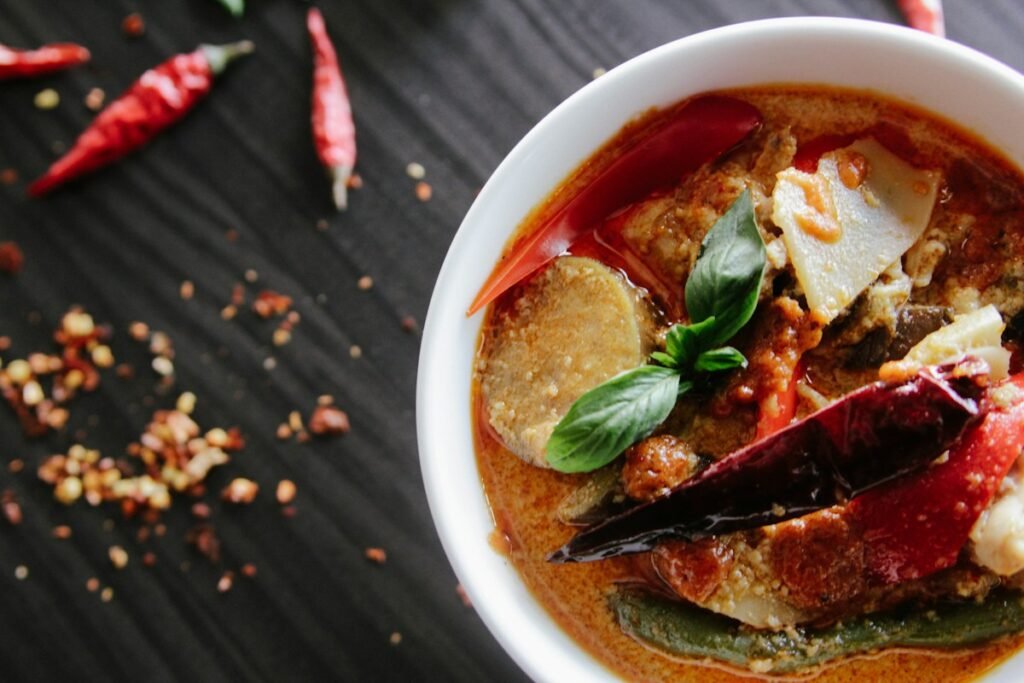
For a Thai-inspired sample buffet, discuss an uncomplicated accompaniment, a main dish with a softer texture, a contrasting preparation, and a fresher element. A curry-style centerpiece, a noodle idea, and a Thai-style salad might be a useful starting conversation. The final selection should reflect what the caterer can prepare and serve well.
Avoid treating every available favorite as essential. Several dishes with the same texture or intensity can make a long buffet feel less varied than a smaller, considered selection.
Plan the serving details
- Ask who supplies and positions each serving utensil.
- Agree on the wording of dish labels after recipes are confirmed.
- Identify the person responsible for replenishment and guest questions.
- Decide how assisted service will work when a guest needs it.
- Keep drinks and used plates out of the main food route.
Have the caterer provide a suitable food-handling plan for the venue and season. Do not assume a buffet can simply remain in place for the whole celebration.
Make the final handover clear
Before the event, share one version of the room plan, service timetable, and agreed menu. Confirm when setup begins, when food service ends, and who manages cleanup. If the celebration moves between indoor and outdoor spaces, agree on which area is the primary dining location.
Use the guest count to start a portion-planning discussion with the caterer. Avoid generic quantities copied from another event: reception length, service style, and other food on offer can change what is appropriate. A well-managed buffet feels plentiful because it is coherent and cared for.
For your regional edition
Organizing a celebration in Canada from the US? Send the room layout with your inquiry so a discussion of buffet size does not rely on assumptions about the venue.