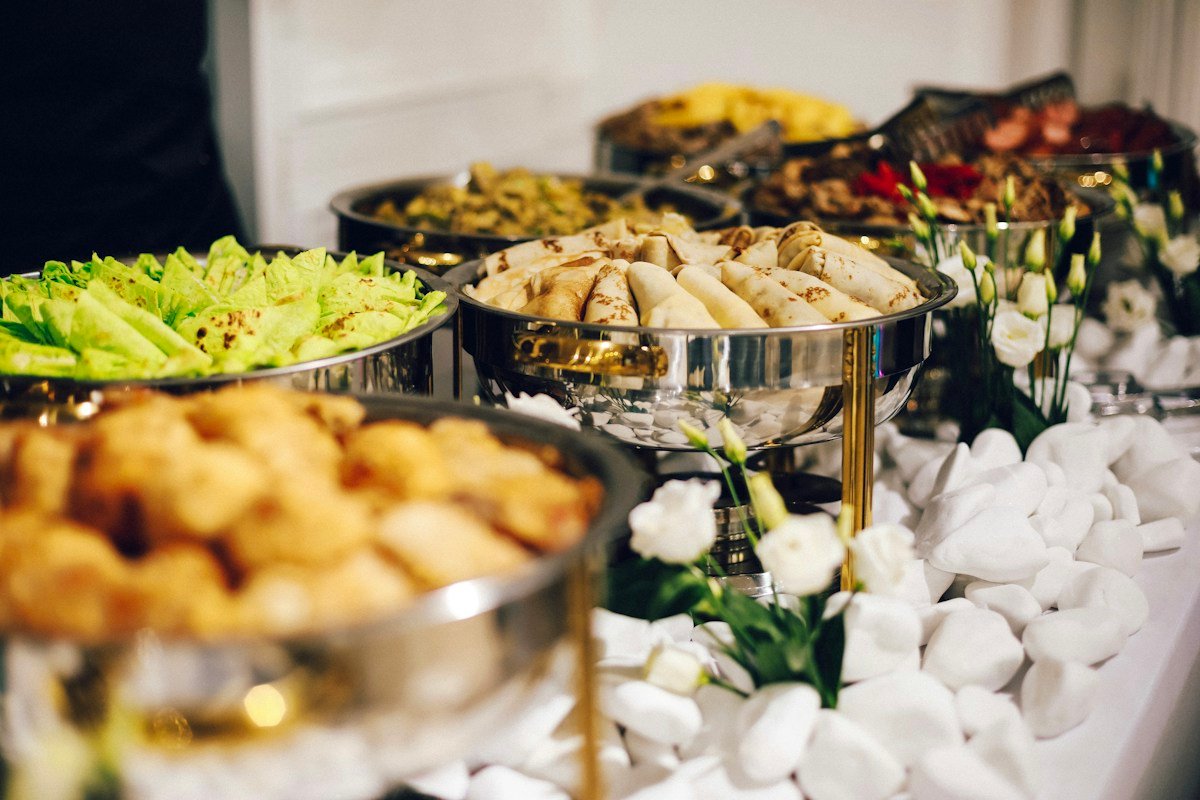
An elegant cocktail reception gives guests room to move while still making them feel properly hosted. Before choosing appetisers, decide whether the event is a short welcome before dinner or the main meal of the evening. That decision affects the amount of food, the mix of dishes, and the way the invitation should describe the occasion.
For an American-inspired menu, choose a few regional references and present them in practical portions. Miniature lobster rolls, small vegetable tartlets, and neat bites of roast beef on toast are possible ideas. They do not need to appear together. Select combinations that your caterer can prepare and serve consistently, with clear alternatives for guests who avoid seafood or meat.
Balance flavour and convenience
A strong menu includes fresh, warm, crisp, and more substantial items. Avoid making every bite creamy, fried, or cheese-heavy. Small vegetable cups can bring brightness, while a warm mushroom tartlet adds depth. Keep sauces controlled so guests can eat neatly. If a dish needs both hands, a knife, and a steady plate, it may belong at a seated station instead.
Treat the plant-based selection as part of the main menu. Include an appealing warm option and a more filling choice, rather than relying only on salad. Brief servers on ingredients and ask the kitchen to maintain a written ingredient list. Guests should be able to ask a question without receiving a guess about what a particular bite contains.
Let the room support the food
Distribute drinks and food so the whole room stays active. A single popular station beside the entrance can create a queue before guests have settled in. Provide some chairs, surfaces for glasses, and clear routes for servers. Ask the team to circulate through quieter corners as well as the busiest groups, so everyone has a fair chance to enjoy the menu.
Finish with small desserts that are easy to pick up, such as individual fruit tarts or little chocolate portions. Offer water and a thoughtful alcohol-free drink throughout the event. Before booking, confirm staffing, equipment, service duration, and what happens to unused food. A premium reception succeeds when guests feel looked after from their first welcome to the final bite.
An elegant French-inspired dinner party is about the rhythm of the meal as much as the dishes. A welcome drink, a small starter, a main course, and a thoughtful finish give the evening a clear shape. You can add a cheese course when it suits the occasion, but there is no need to turn a private celebration into a test of formal etiquette.
Choose a regional direction or a simple seasonal idea before selecting recipes. A menu inspired by Provence will feel different from one built around a Parisian bistro mood. Using that focus helps you choose flavours, table details, and drinks that belong together. Be clear that your menu is an adaptation when you combine ideas from several places.
Keep the food precise and balanced
A sample menu might begin with a small mushroom tart, followed by roast chicken with a light herb sauce and seasonal vegetables. A lentil and vegetable main course can provide an equally complete alternative. If you include cheese, choose a small, varied selection and serve modest portions. Finish with a fruit tart or another dessert that does not repeat the richness of every earlier course.
Ask the caterer to explain the balance across the whole meal, not only the main plate. Butter, pastry, cream, and cheese can become tiring when they appear heavily in every course. A little acidity from fruit, a dressed salad, or a fresh herb element can give the menu more energy. The goal is variety within a coherent evening.
Make the table welcoming
Choose glassware and cutlery according to what you are serving rather than placing every possible item on the table. Low flowers and gentle lighting support conversation. Put water within easy reach and arrange enough space between settings. If the dinner includes paired drinks, offer an alcohol-free pairing with the same attention to flavour and presentation.
Confirm the course sequence, dietary alternatives, and speech timing before guests arrive. At the tasting, consider the final bites of each course and how they lead into the next one. Leave room for coffee and relaxed conversation after dessert. A premium French-inspired dinner feels successful when the setting supports the food and the food supports the pleasure of being together.
Planning a Memorable Thai-Inspired Event in the United States
A Thai-inspired event in the United States does not need a complicated concept. A clear intention, a considered menu, and well-defined responsibilities give the occasion a stronger foundation than a long list of decorative ideas.
Describe the occasion in one paragraph
Start with the actual US city and venue, the approximate number of guests, the purpose of the event, and the atmosphere you want. Add whether the food is the main experience or part of a wider programme. A wedding dinner, an anniversary gathering, and an office reception need different kinds of attention.
Make clear that you are requesting proposals from local suppliers. An editorial website’s discussion of a country is not confirmation that a particular catering business operates there.
Assign each responsibility
Ask who will handle delivery, preparation space, service equipment, table settings, staffing, and cleanup. Request a named event-day contact from each supplier. When the venue and caterer are different businesses, confirm where one team’s responsibility ends and the other’s begins.
Have the local professionals confirm any venue or local requirements affecting the plan. Avoid borrowing assumptions from another state or a previous event in another country.
Build Thai inspiration around a coherent meal
Choose a direction before individual dishes: a shared dinner, a seated sequence, or a reception with a small-bite menu. Ask the caterer to propose preparations that fit the format. Discuss contrast, pacing, and clear descriptions, rather than trying to include every familiar dish.
Sample menu ideas are useful for explaining preferences, but they do not establish recipes, dietary suitability, availability, or prices. Confirm those points in the supplier’s actual proposal.
Compare like with like
Use the same guest count and service period in each request.
Identify included equipment and staffing.
Separate food, delivery, setup, and cleanup responsibilities.
Confirm the quotation currency and how additional charges are presented.
Read the supplier’s actual terms before making a commitment.
A smaller, fully described proposal can be easier to manage than an expansive menu with unclear service details.
Bring everything into one final plan
Share the confirmed menu, arrival times, room layout, and event contacts in one document. If planning remotely, use the venue’s local time throughout. Then leave room in the programme for conversation. The aim is an occasion people enjoy being part of, not a schedule they spend the evening trying to keep up with.
For your regional edition
If you are coordinating from Canada, name both the US event location and the quotation currency in every supplier comparison.
How to Build a Balanced Thai Buffet Menu in Montreal
How to Build a Balanced Thai Buffet Menu in Montreal
Planning a memorable gathering in Montréal involves more than deciding what to eat. The right thai buffet catering montreal approach connects flavour, hospitality and practical details so guests can relax and enjoy the occasion. Thai cuisine is particularly versatile because it can combine aromatic herbs, fresh vegetables, satisfying rice dishes and a range of textures in one menu.
This guide explores the decisions that make the biggest difference, from selecting a service style to communicating with your venue. It is intended for hosts, office coordinators and event planners who want informed questions rather than a one-size-fits-all checklist. Thai Glory Bowl provides Thai catering for weddings, corporate occasions, private events and boxed lunches in the Montréal area; specific arrangements should always be confirmed with the team.
Begin with contrast
When planning thai buffet catering montreal, begin by examining one noodle dish, one rice dish and two complementary mains. This is not a minor administrative detail: balance is more inviting than a lineup of nearly identical dishes. Write down what matters most for the people attending, and distinguish essential requirements from optional ideas. Doing so keeps the conversation focused and helps you avoid choosing an attractive menu that is difficult to serve in the actual setting.
Understand flavour families
When planning thai buffet catering montreal, begin by examining aromatic, citrusy, mildly sweet and savoury notes. This is not a minor administrative detail: Thai food offers more than simply increasing chilli heat. Write down what matters most for the people attending, and distinguish essential requirements from optional ideas. Doing so keeps the conversation focused and helps you avoid choosing an attractive menu that is difficult to serve in the actual setting.
For example, picture guests arriving at different times and trying to find their seats, refreshments or a place to talk. A well-planned food arrangement makes those movements natural. Ask who will prepare the space, who will direct guests and what equipment or serving items are available. The appropriate solution depends on the venue, the group size and the amount of time reserved for dining.
Include vegetable-forward options
When planning thai buffet catering montreal, begin by examining stir-fried vegetables, tofu and fresh herb dishes. This is not a minor administrative detail: vegetarian guests should receive a complete choice. Write down what matters most for the people attending, and distinguish essential requirements from optional ideas. Doing so keeps the conversation focused and helps you avoid choosing an attractive menu that is difficult to serve in the actual setting.
Select useful starches
When planning thai buffet catering montreal, begin by examining jasmine rice, fried rice and noodles. This is not a minor administrative detail: different starches help guests combine a meal they enjoy. Write down what matters most for the people attending, and distinguish essential requirements from optional ideas. Doing so keeps the conversation focused and helps you avoid choosing an attractive menu that is difficult to serve in the actual setting.
Keep service practical
When planning thai buffet catering montreal, begin by examining ladles, tongs, spacing and replenishment. This is not a minor administrative detail: a buffet must function well throughout the meal. Write down what matters most for the people attending, and distinguish essential requirements from optional ideas. Doing so keeps the conversation focused and helps you avoid choosing an attractive menu that is difficult to serve in the actual setting.
For example, picture guests arriving at different times and trying to find their seats, refreshments or a place to talk. A well-planned food arrangement makes those movements natural. Ask who will prepare the space, who will direct guests and what equipment or serving items are available. The appropriate solution depends on the venue, the group size and the amount of time reserved for dining.
Label dishes clearly
When planning thai buffet catering montreal, begin by examining common allergens, meat choices and spice levels. This is not a minor administrative detail: clear descriptions build guest confidence. Write down what matters most for the people attending, and distinguish essential requirements from optional ideas. Doing so keeps the conversation focused and helps you avoid choosing an attractive menu that is difficult to serve in the actual setting.
Account for the setting
When planning thai buffet catering montreal, begin by examining indoor or outdoor arrangement and access to serving space. This is not a minor administrative detail: venue constraints influence practical menu choices. Write down what matters most for the people attending, and distinguish essential requirements from optional ideas. Doing so keeps the conversation focused and helps you avoid choosing an attractive menu that is difficult to serve in the actual setting.
For example, picture guests arriving at different times and trying to find their seats, refreshments or a place to talk. A well-planned food arrangement makes those movements natural. Ask who will prepare the space, who will direct guests and what equipment or serving items are available. The appropriate solution depends on the venue, the group size and the amount of time reserved for dining.
Finish with an inviting experience
When planning thai buffet catering montreal, begin by examining attractive garnishes and a sensible order of dishes. This is not a minor administrative detail: presentation can tell a story without making the line slow. Write down what matters most for the people attending, and distinguish essential requirements from optional ideas. Doing so keeps the conversation focused and helps you avoid choosing an attractive menu that is difficult to serve in the actual setting.
Questions to ask before confirming
What food and service format best suit the event?
What guest count and dietary information should be finalized?
What is included in delivery, setup and on-site service?
What information does the venue require from the caterer?
When must the organizer confirm the final details?
With a clear brief and realistic service plan, thai buffet catering montreal can become a welcoming part of the event instead of a source of uncertainty. Explore Thai Glory Bowl’s catering options and explain your location, approximate guest count and preferred menu to begin a useful conversation.
Thai-Inspired Appetizers for Cocktail Receptions and Private Events
The best reception bite respects what the guest is doing. Someone holding a glass and greeting a friend has less room for a complicated plate than someone seated at a table. Begin with that simple observation when planning Thai-inspired appetizers.
Try the one-hand test
Ask whether each proposed bite can be picked up, eaten, and finished without balancing a loose garnish or searching for cutlery. Discuss size, drips, discarded skewers, and where used napkins will go. These details do not sound glamorous, but they let guests relax.
If an idea needs a bowl or fork, give it a proper eating place. It may work well at a staffed station or as a seated opening course even when it is awkward as a passed bite.
Use a short list with a clear contrast
For a sample discussion, consider a Thai-style roll, a grilled-bite idea, and a small salad presentation. These are possible formats, not verified recipes. Ask your caterer what can be prepared consistently and how the dishes will look after travelling from the kitchen to the guest.
Then compare the proposed textures. A crisp bite followed by a softer one can create more interest than three similar fried items. Discuss the balance across the whole selection and confirm actual ingredients before describing any dish to guests.
Decide where the food meets the conversation
Passed service can bring food to guests, while a fixed station gives them a place to return. Neither arrangement solves every room. Consider entrances, seating, and where small groups are likely to gather. Give people a place to set down a glass without using the food display as a shelf.
Ask four useful tasting questions
Is this comfortable to eat while standing?
Does it stay appealing during the intended service journey?
Can the service team describe it clearly?
How will guests with particular requirements receive a confirmed alternative?
Do not judge dietary suitability from a dish name or photograph. The caterer must confirm the recipe and preparation arrangements.
Finally, make clear whether the reception bites are the whole meal or a welcome before dinner. Tell guests what to expect and ask the caterer to plan portions for that purpose. A small-bite menu should feel deliberate, not like a meal that never quite arrives.
For your regional edition
At a bilingual Canadian reception, keep dish descriptions short enough to read comfortably in both English and French.
Corporate Thai Catering for Productive Montréal Meetings
Corporate Thai Catering for Productive Montréal Meetings
Corporate Thai Catering for Productive Montréal Meetings starts with understanding what participants should feel when they share a meal. A successful event in Montréal combines practical hospitality with food choices that make sense for the setting. Thai cuisine offers attractive possibilities through aromatic ingredients, rice and noodle dishes, colourful vegetables and a range of serving formats. Yet every event has its own needs. The guidance below helps organizers ask better questions, compare realistic options and shape a thoughtful catering brief without assuming that a particular dish, package or service is automatically available.
AI-generated editorial illustration for Corporate Thai Catering for Productive Montréal Meetings
Matching food to the agenda
For matching food to the agenda, begin by considering how the specific gathering will function. A reception with standing guests requires different portion sizes and movement patterns from a seated dinner. Describe the guest experience before choosing dishes. Corporate meals have a practical job to do: nourish participants without taking over the agenda. Food should be easy to receive, identify and enjoy within the available break. Organizers can reduce avoidable disruption by sharing arrival instructions, participant counts and a single point of contact. This approach helps a host avoid impressive-looking arrangements that are awkward in practice.
One helpful exercise is to imagine a guest encountering this part of the event for the first time. Will the food be easy to identify? Are there clear choices for different appetites? Can someone ask a question about ingredients without holding up the line? For matching food to the agenda, these small design decisions can have as much impact as the selected recipes. If the answer depends on the venue or the caterer, record it as a question for the next planning conversation rather than treating it as settled.
Meeting-friendly portion choices
The central decision in meeting-friendly portion choices is how much choice to offer without making service confusing. Build a manageable plan around the event context, room size and expected participation. The clearest catering brief covers format, delivery access, service expectations, dietary notes and a realistic handoff. For a working session, discuss packaging and cleanup rather than assuming full-service staff are included. For a social team event, ask about the possibilities for more interactive presentation. For each proposed choice, ask how the food will be presented, identified and accommodated within the actual event schedule.
AI-generated editorial illustration for Corporate Thai Catering for Productive Montréal Meetings
One helpful exercise is to imagine a guest encountering this part of the event for the first time. Will the food be easy to identify? Are there clear choices for different appetites? Can someone ask a question about ingredients without holding up the line? For meeting-friendly portion choices, these small design decisions can have as much impact as the selected recipes. If the answer depends on the venue or the caterer, record it as a question for the next planning conversation rather than treating it as settled.
Providing accurate dietary information
Consider the operational side of providing accurate dietary information: what the venue permits, where containers can be placed, how staff or hosts communicate and who is responsible for changes. A thoughtful plan has a named contact and realistic assumptions. The aim is to create a relaxed occasion for guests by removing uncertain handoffs before they become last-minute distractions.
One helpful exercise is to imagine a guest encountering this part of the event for the first time. Will the food be easy to identify? Are there clear choices for different appetites? Can someone ask a question about ingredients without holding up the line? For providing accurate dietary information, these small design decisions can have as much impact as the selected recipes. If the answer depends on the venue or the caterer, record it as a question for the next planning conversation rather than treating it as settled.
Managing arrivals and cleanup
For managing arrivals and cleanup, begin by considering how the specific gathering will function. A reception with standing guests requires different portion sizes and movement patterns from a seated dinner. Describe the guest experience before choosing dishes. Corporate meals have a practical job to do: nourish participants without taking over the agenda. Food should be easy to receive, identify and enjoy within the available break. Organizers can reduce avoidable disruption by sharing arrival instructions, participant counts and a single point of contact. This approach helps a host avoid impressive-looking arrangements that are awkward in practice.
One helpful exercise is to imagine a guest encountering this part of the event for the first time. Will the food be easy to identify? Are there clear choices for different appetites? Can someone ask a question about ingredients without holding up the line? For managing arrivals and cleanup, these small design decisions can have as much impact as the selected recipes. If the answer depends on the venue or the caterer, record it as a question for the next planning conversation rather than treating it as settled.
AI-generated editorial illustration for Corporate Thai Catering for Productive Montréal Meetings
Start with a clear event brief
Write down the purpose of the occasion, approximate attendance, serving style and the time guests will actually eat. A concise brief gives a caterer enough context to suggest a relevant service format. Include delivery access, room location, contact person and any restrictions imposed by the venue. It also makes comparisons fair: two proposals may differ because one includes staffing or equipment while another covers food only. Ask for clarification rather than inferring that every element is included.
Plan for dietary needs without making assumptions
Gather dietary information directly from attendees where appropriate, including food allergies and ingredient restrictions. Do not treat broad labels such as vegetarian, vegan, gluten-free or nut-free as a complete safety guarantee. Request written clarification about ingredients, sauces, preparation methods and possible cross-contact. Keep food labels and an organizer contact available at the event so guests can make informed decisions. An inclusive plan offers a sensible range of options and an honest way to address uncertainty.
Think through the experience from arrival to cleanup
Picture the actual route food will follow: building entrance, elevator or stairs, staging area, serving surface and final removal. Ask who receives the order, who places labels, who replenishes dishes and who handles leftovers or waste. At a busy venue, a simple layout drawing may prevent queues. Planning these details also protects the guest experience, because participants can focus on the occasion instead of navigating avoidable service obstacles.
Make menu choices with purpose
Use variety to serve different preferences rather than adding dishes solely for appearance. Consider something familiar, a vegetable-forward option, a substantial main dish and accompaniments that work together. In Thai cuisine, noodles, rice, curry and aromatic vegetables can create complementary choices, but the exact selection needs confirmation against the caterer’s available menu. Discuss spice levels, textures and portion expectations before making final promises to attendees.
Request a quote that can actually be compared
A useful quotation identifies the proposed menu, estimated guest count, service style, delivery area and any separate charges. Ask which details are provisional, what changes require approval and when final numbers must be supplied. If the event uses a hotel or hired venue, confirm vendor access and permitted equipment beforehand. Written agreement on these items avoids confusion among the host, venue and catering provider; the goal is clarity, not a rigid one-size-fits-all package.
Keep communications simple and traceable
Choose one person to consolidate questions and approvals. Send a short summary of decisions after each planning conversation: selected menu direction, dietary requests, delivery instructions and unresolved points. Separate confirmed facts from preferences that still depend on availability. Share the latest version with relevant venue staff. This is particularly valuable for events involving outside organizers, because everyone works from the same practical information rather than different recollections of a conversation.
Questions to ask before confirming
What dishes and service styles are actually available for this kind of occasion? Which costs are included and which depend on venue access, staffing or delivery? How can guests identify ingredients and communicate a food allergy? Who coordinates arrival and setup with the building? Which parts of the plan need a final written decision? These questions create a practical conversation rather than an expectation based on a photograph or a sample package.
Exploring a relevant Thai catering menu
Traiteur Thai Glory Bowl publishes examples of Thai dishes and catering formats for the Montréal market. They are useful references for considering possibilities, not a substitute for a confirmed proposal. Review the Thai corporate catering Montreal information alongside related catering details, then ask the team to clarify what fits the event and what arrangements would be required.
Further reading
For service illustrations rather than independent third-party endorsements, see sample Thai catering menus and wedding and event information on the provider’s own website. Independent external reference research remains an editorial review item.
Vegetarian and Plant-Based Thai Catering: Questions to Ask First
A plant-based event menu works best when it is designed as a complete meal. Instead of beginning with what to remove from another menu, describe the experience you want: a satisfying main course, contrasting textures, and the same care in presentation as every other option.
Define what the request means
“Vegetarian,” “plant-based,” and a guest’s individual requirements are not interchangeable instructions. Ask guests to communicate their needs privately through the event’s agreed process, then give the caterer an accurate brief. Do not infer requirements from a label alone.
Keep medical or allergy information out of a public group chat. Agree on who needs the information and how the caterer will confirm what can be accommodated.
Start a discussion with menu concepts
A vegetable-led curry idea, a Thai-style noodle preparation, or a composed salad can be useful concepts to discuss. None is automatically vegetarian, vegan, or suitable for a particular allergy. The full preparation, including sauces, garnishes, and purchased components, needs confirmation.
Ask for a written description of the actual proposed dish. A photograph or a familiar menu name cannot verify ingredients or preparation conditions. If a supplier cannot confirm a requirement, do not present the dish as suitable.
Make the option feel like part of the occasion
Think about the whole sequence. Does the guest receive an opening dish at the same time as everyone else? Is there an equally considered main course? Is the final course also covered? A single alternative plate does not answer the needs of a multi-course event.
For shared service, ask how portions will be identified and distributed so the intended guests can receive their meal. For a buffet, confirm how guests will find reliable information without having to ask several different staff members.
Use a confirmation checklist
Confirm the guest’s actual requirement through the agreed private channel.
Obtain the caterer’s recipe and preparation assessment.
Agree on the exact wording of menu descriptions.
Identify the service contact for questions on the day.
Record any limitations before the menu is approved.
These ideas are editorial prompts. Only the chosen caterer can confirm the actual recipes, availability, and suitability of what will be served.
For your regional edition
For a US event, have the actual local caterer assess requirements; a Canadian reference page does not establish the suitability of a US preparation.
Balancing Thai Flavours Across a Group Menu
A group menu is more than a collection of popular dishes. Each plate changes how the next one feels. When planning a Thai-inspired meal, it helps to describe what a dish contributes to the table instead of choosing everything in isolation.
Describe roles, not a rigid formula
At the planning stage, use ordinary words: bright, rich, soft, crisp, fragrant, gentle, or more intense. Ask the caterer how the proposed dishes relate to one another. You are looking for variation and a clear overall direction, not a mathematical rule for Thai cuisine.
A richer main dish might benefit from a contrasting preparation and a simple accompaniment. Several intense dishes might be exciting for one group and tiring for another. The useful question is how the whole meal works for the particular people attending.
Separate heat from the rest of the conversation
Do not reduce the brief to “mild” or “spicy.” Ask how the caterer describes the full experience of a dish and which elements, if any, can be offered separately without compromising the intended preparation. Those decisions depend on the recipe.
For a mixed group, agree on clear descriptions that guests can understand. Avoid promising that a dish will suit everyone. Personal preferences and dietary needs should be discussed through an appropriate private process.
Taste the meal in its intended order
At a tasting, try a small amount of the proposed sequence rather than judging each dish as a standalone winner. Notice whether the meal becomes repetitive, whether textures change, and whether the ending feels considered. Write down relationships: “these two feel similar” is more actionable than “we need something else.”
Which dish gives the menu its main identity?
Where does a contrasting texture appear?
Is there an uncomplicated element between more expressive dishes?
Does the final course fit what came before?
Translate the tasting into a service plan
Balance also depends on how food reaches the table. A buffet allows guests to combine dishes differently, while a seated sequence gives the kitchen more control over order. Ask the caterer to review the menu for the actual format.
Keep the final descriptions specific to confirmed preparations. A menu can celebrate Thai inspiration without claiming to represent every region or tradition. A short explanation of the chosen direction is more welcoming than a long list of claims about authenticity.
For your regional edition
For a US event, use the caterer’s actual description of the preparation rather than assuming familiar restaurant names guarantee the same dish.
Thai-Inspired Appetizers for Cocktail Receptions and Private Events
The best reception bite respects what the guest is doing. Someone holding a glass and greeting a friend has less room for a complicated plate than someone seated at a table. Begin with that simple observation when planning Thai-inspired appetizers.
Try the one-hand test
Ask whether each proposed bite can be picked up, eaten, and finished without balancing a loose garnish or searching for cutlery. Discuss size, drips, discarded skewers, and where used napkins will go. These details do not sound glamorous, but they let guests relax.
If an idea needs a bowl or fork, give it a proper eating place. It may work well at a staffed station or as a seated opening course even when it is awkward as a passed bite.
Use a short list with a clear contrast
For a sample discussion, consider a Thai-style roll, a grilled-bite idea, and a small salad presentation. These are possible formats, not verified recipes. Ask your caterer what can be prepared consistently and how the dishes will look after travelling from the kitchen to the guest.
Then compare the proposed textures. A crisp bite followed by a softer one can create more interest than three similar fried items. Discuss the balance across the whole selection and confirm actual ingredients before describing any dish to guests.
Decide where the food meets the conversation
Passed service can bring food to guests, while a fixed station gives them a place to return. Neither arrangement solves every room. Consider entrances, seating, and where small groups are likely to gather. Give people a place to set down a glass without using the food display as a shelf.
Ask four useful tasting questions
Is this comfortable to eat while standing?
Does it stay appealing during the intended service journey?
Can the service team describe it clearly?
How will guests with particular requirements receive a confirmed alternative?
Do not judge dietary suitability from a dish name or photograph. The caterer must confirm the recipe and preparation arrangements.
Finally, make clear whether the reception bites are the whole meal or a welcome before dinner. Tell guests what to expect and ask the caterer to plan portions for that purpose. A small-bite menu should feel deliberate, not like a meal that never quite arrives.
For your regional edition
For a US cocktail reception, make the invitation clear about whether food is a full dinner substitute or a short welcome before another meal.
How to Plan a Thai-Inspired Buffet for a Canadian Celebration
A successful buffet is a small piece of event design. Guests need to understand where to begin, what they are choosing, and how to return to their seats. Thinking through that journey is more useful than simply adding more dishes to the table.
Walk the route as a guest
Start at the entrance and follow the proposed food route. Can someone carrying a plate move comfortably? Is there room for a guest who needs extra assistance? Does the queue block access to seating or drinks? Draw the route on the room plan and ask the venue to review it.
Decide whether a second serving point would help. This is a question for the caterer and venue, not a rule based only on guest count. The shape of the room and the service period matter too.
Give each dish a different role
For a Thai-inspired sample buffet, discuss an uncomplicated accompaniment, a main dish with a softer texture, a contrasting preparation, and a fresher element. A curry-style centerpiece, a noodle idea, and a Thai-style salad might be a useful starting conversation. The final selection should reflect what the caterer can prepare and serve well.
Avoid treating every available favorite as essential. Several dishes with the same texture or intensity can make a long buffet feel less varied than a smaller, considered selection.
Plan the serving details
Ask who supplies and positions each serving utensil.
Agree on the wording of dish labels after recipes are confirmed.
Identify the person responsible for replenishment and guest questions.
Decide how assisted service will work when a guest needs it.
Keep drinks and used plates out of the main food route.
Have the caterer provide a suitable food-handling plan for the venue and season. Do not assume a buffet can simply remain in place for the whole celebration.
Make the final handover clear
Before the event, share one version of the room plan, service timetable, and agreed menu. Confirm when setup begins, when food service ends, and who manages cleanup. If the celebration moves between indoor and outdoor spaces, agree on which area is the primary dining location.
Use the guest count to start a portion-planning discussion with the caterer. Avoid generic quantities copied from another event: reception length, service style, and other food on offer can change what is appropriate. A well-managed buffet feels plentiful because it is coherent and cared for.
For your regional edition
Organizing a celebration in Canada from the US? Send the room layout with your inquiry so a discussion of buffet size does not rely on assumptions about the venue.
 Canada
 United States
 France