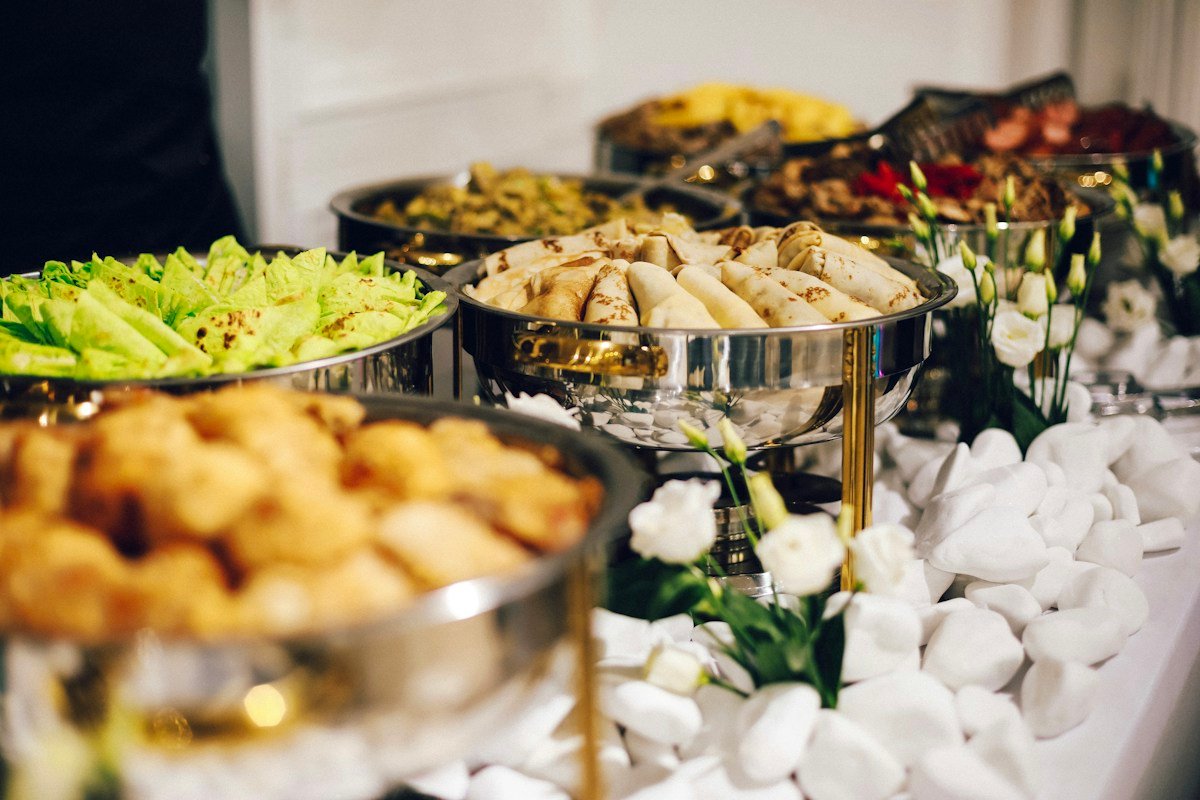
An elegant cocktail reception gives guests room to move while still making them feel properly hosted. Before choosing appetisers, decide whether the event is a short welcome before dinner or the main meal of the evening. That decision affects the amount of food, the mix of dishes, and the way the invitation should describe the occasion.
For an American-inspired menu, choose a few regional references and present them in practical portions. Miniature lobster rolls, small vegetable tartlets, and neat bites of roast beef on toast are possible ideas. They do not need to appear together. Select combinations that your caterer can prepare and serve consistently, with clear alternatives for guests who avoid seafood or meat.
Balance flavour and convenience
A strong menu includes fresh, warm, crisp, and more substantial items. Avoid making every bite creamy, fried, or cheese-heavy. Small vegetable cups can bring brightness, while a warm mushroom tartlet adds depth. Keep sauces controlled so guests can eat neatly. If a dish needs both hands, a knife, and a steady plate, it may belong at a seated station instead.
Treat the plant-based selection as part of the main menu. Include an appealing warm option and a more filling choice, rather than relying only on salad. Brief servers on ingredients and ask the kitchen to maintain a written ingredient list. Guests should be able to ask a question without receiving a guess about what a particular bite contains.
Let the room support the food
Distribute drinks and food so the whole room stays active. A single popular station beside the entrance can create a queue before guests have settled in. Provide some chairs, surfaces for glasses, and clear routes for servers. Ask the team to circulate through quieter corners as well as the busiest groups, so everyone has a fair chance to enjoy the menu.
Finish with small desserts that are easy to pick up, such as individual fruit tarts or little chocolate portions. Offer water and a thoughtful alcohol-free drink throughout the event. Before booking, confirm staffing, equipment, service duration, and what happens to unused food. A premium reception succeeds when guests feel looked after from their first welcome to the final bite.
Designing a Thai Wedding Menu in Montréal starts with understanding what participants should feel when they share a meal. A successful event in Montréal combines practical hospitality with food choices that make sense for the setting. Thai cuisine offers attractive possibilities through aromatic ingredients, rice and noodle dishes, colourful vegetables and a range of serving formats. Yet every event has its own needs. The guidance below helps organizers ask better questions, compare realistic options and shape a thoughtful catering brief without assuming that a particular dish, package or service is automatically available.
AI-generated editorial illustration for Designing a Thai Wedding Menu in Montréal
Building a menu around the reception
For building a menu around the reception, begin by considering how the specific gathering will function. A reception with standing guests requires different portion sizes and movement patterns from a seated dinner. Describe the guest experience before choosing dishes. Wedding dining is part of the event rhythm. Guests may be seated, circulating or moving between ceremonial and reception spaces, and the food plan must work around these changes. A menu that looks beautiful on paper still needs an achievable setup window, a clear service format and realistic coordination with venue personnel. This approach helps a host avoid impressive-looking arrangements that are awkward in practice.
One helpful exercise is to imagine a guest encountering this part of the event for the first time. Will the food be easy to identify? Are there clear choices for different appetites? Can someone ask a question about ingredients without holding up the line? For building a menu around the reception, these small design decisions can have as much impact as the selected recipes. If the answer depends on the venue or the caterer, record it as a question for the next planning conversation rather than treating it as settled.
Comparing buffet and seated formats
The central decision in comparing buffet and seated formats is how much choice to offer without making service confusing. Build a manageable plan around the event context, room size and expected participation. An elegant experience does not require the largest number of dishes. A smaller, carefully balanced selection can be easier for guests to navigate and for the event team to replenish. Confirm how the couple wants the meal to feel: informal shared celebration, structured seated dinner or a relaxed buffet. For each proposed choice, ask how the food will be presented, identified and accommodated within the actual event schedule.
AI-generated editorial illustration for Designing a Thai Wedding Menu in Montréal
One helpful exercise is to imagine a guest encountering this part of the event for the first time. Will the food be easy to identify? Are there clear choices for different appetites? Can someone ask a question about ingredients without holding up the line? For comparing buffet and seated formats, these small design decisions can have as much impact as the selected recipes. If the answer depends on the venue or the caterer, record it as a question for the next planning conversation rather than treating it as settled.
Welcoming a mixed guest list
Consider the operational side of welcoming a mixed guest list: what the venue permits, where containers can be placed, how staff or hosts communicate and who is responsible for changes. A thoughtful plan has a named contact and realistic assumptions. The aim is to create a relaxed occasion for guests by removing uncertain handoffs before they become last-minute distractions.
One helpful exercise is to imagine a guest encountering this part of the event for the first time. Will the food be easy to identify? Are there clear choices for different appetites? Can someone ask a question about ingredients without holding up the line? For welcoming a mixed guest list, these small design decisions can have as much impact as the selected recipes. If the answer depends on the venue or the caterer, record it as a question for the next planning conversation rather than treating it as settled.
Sequencing dinner and speeches
For sequencing dinner and speeches, begin by considering how the specific gathering will function. A reception with standing guests requires different portion sizes and movement patterns from a seated dinner. Describe the guest experience before choosing dishes. Wedding dining is part of the event rhythm. Guests may be seated, circulating or moving between ceremonial and reception spaces, and the food plan must work around these changes. A menu that looks beautiful on paper still needs an achievable setup window, a clear service format and realistic coordination with venue personnel. This approach helps a host avoid impressive-looking arrangements that are awkward in practice.
One helpful exercise is to imagine a guest encountering this part of the event for the first time. Will the food be easy to identify? Are there clear choices for different appetites? Can someone ask a question about ingredients without holding up the line? For sequencing dinner and speeches, these small design decisions can have as much impact as the selected recipes. If the answer depends on the venue or the caterer, record it as a question for the next planning conversation rather than treating it as settled.
AI-generated editorial illustration for Designing a Thai Wedding Menu in Montréal
Start with a clear event brief
Write down the purpose of the occasion, approximate attendance, serving style and the time guests will actually eat. A concise brief gives a caterer enough context to suggest a relevant service format. Include delivery access, room location, contact person and any restrictions imposed by the venue. It also makes comparisons fair: two proposals may differ because one includes staffing or equipment while another covers food only. Ask for clarification rather than inferring that every element is included.
Plan for dietary needs without making assumptions
Gather dietary information directly from attendees where appropriate, including food allergies and ingredient restrictions. Do not treat broad labels such as vegetarian, vegan, gluten-free or nut-free as a complete safety guarantee. Request written clarification about ingredients, sauces, preparation methods and possible cross-contact. Keep food labels and an organizer contact available at the event so guests can make informed decisions. An inclusive plan offers a sensible range of options and an honest way to address uncertainty.
Think through the experience from arrival to cleanup
Picture the actual route food will follow: building entrance, elevator or stairs, staging area, serving surface and final removal. Ask who receives the order, who places labels, who replenishes dishes and who handles leftovers or waste. At a busy venue, a simple layout drawing may prevent queues. Planning these details also protects the guest experience, because participants can focus on the occasion instead of navigating avoidable service obstacles.
Make menu choices with purpose
Use variety to serve different preferences rather than adding dishes solely for appearance. Consider something familiar, a vegetable-forward option, a substantial main dish and accompaniments that work together. In Thai cuisine, noodles, rice, curry and aromatic vegetables can create complementary choices, but the exact selection needs confirmation against the caterer’s available menu. Discuss spice levels, textures and portion expectations before making final promises to attendees.
Request a quote that can actually be compared
A useful quotation identifies the proposed menu, estimated guest count, service style, delivery area and any separate charges. Ask which details are provisional, what changes require approval and when final numbers must be supplied. If the event uses a hotel or hired venue, confirm vendor access and permitted equipment beforehand. Written agreement on these items avoids confusion among the host, venue and catering provider; the goal is clarity, not a rigid one-size-fits-all package.
Keep communications simple and traceable
Choose one person to consolidate questions and approvals. Send a short summary of decisions after each planning conversation: selected menu direction, dietary requests, delivery instructions and unresolved points. Separate confirmed facts from preferences that still depend on availability. Share the latest version with relevant venue staff. This is particularly valuable for events involving outside organizers, because everyone works from the same practical information rather than different recollections of a conversation.
Questions to ask before confirming
What dishes and service styles are actually available for this kind of occasion? Which costs are included and which depend on venue access, staffing or delivery? How can guests identify ingredients and communicate a food allergy? Who coordinates arrival and setup with the building? Which parts of the plan need a final written decision? These questions create a practical conversation rather than an expectation based on a photograph or a sample package.
Exploring a relevant Thai catering menu
Traiteur Thai Glory Bowl publishes examples of Thai dishes and catering formats for the Montréal market. They are useful references for considering possibilities, not a substitute for a confirmed proposal. Review the Thai wedding catering Montreal information alongside related catering details, then ask the team to clarify what fits the event and what arrangements would be required.
Further reading
For service illustrations rather than independent third-party endorsements, see sample Thai catering menus and wedding and event information on the provider’s own website. Independent external reference research remains an editorial review item.
 Canada
 United States
 France