Canada
 United States
 France
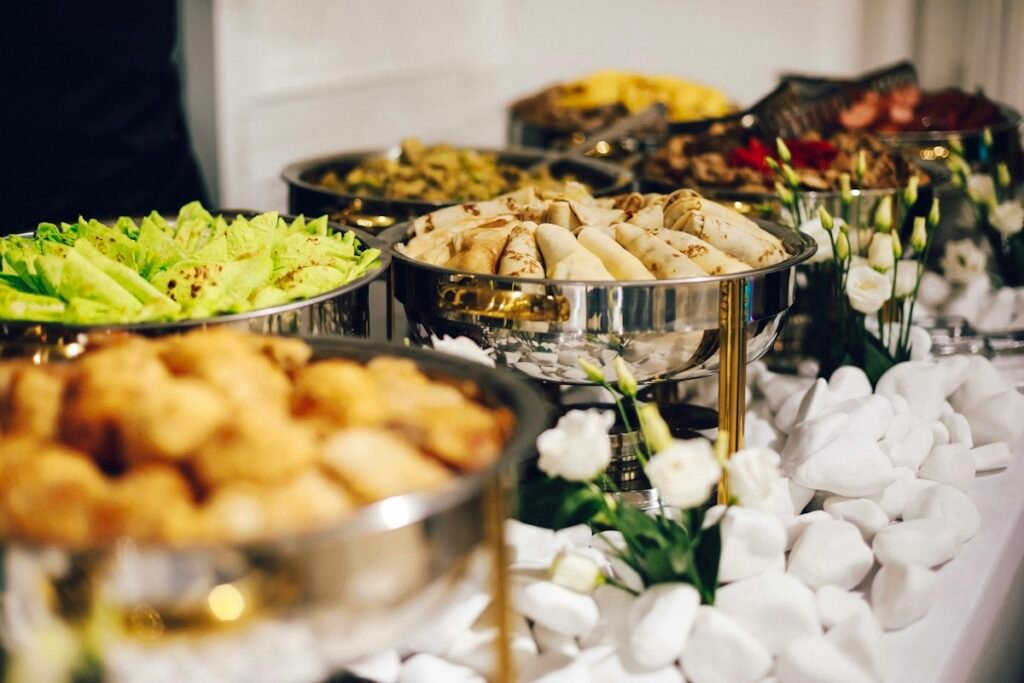
The most useful starting point for a corporate menu is the agenda. Food for a short lunch between presentations has a different job from food at a client reception. Define that job first, then ask a caterer to turn Thai-inspired ideas into a menu that fits the room and the timetable.
Write a one-page event brief
Keep the first brief practical. Include the Toronto venue, estimated attendance, arrival and departure times, the length of the food break, and whether guests will sit or stand. Note who can approve changes and when a final head count is expected.
Then describe the atmosphere in a sentence: a quiet working lunch, an informal team gathering, or a more polished evening reception. That sentence is more useful than an ambitious list of unrelated dishes.
Match the food to the format
- Working lunch: discuss a clear meal structure that can be served and cleared within the break.
- Networking reception: explore smaller bites that leave one hand free and do not demand complicated assembly.
- Team celebration: consider shared platters or a staffed buffet, with enough room for people to circulate.
Thai-style rolls, a noodle course, or a curry-led main meal can be conversation starters with the caterer. They are ideas to evaluate, not a promise about what any supplier offers or what a dish contains.
Check the delivery path, not just the address
For a Toronto office event, ask the building contact about loading access, elevators, visitor registration, and where the food team can work. A delivery instruction should identify the entrance and the responsible person, not simply the floor number.
If a meeting runs late, who will tell the caterer? If the room layout changes, where will service move? Make these decisions before event day. Avoid placing the only food station directly beside a presentation screen or a narrow doorway.
Keep information easy to understand
Request concise dish descriptions and a verified method for handling dietary questions. Guests should know whom to ask; a generic label should never stand in for confirmation of a particular recipe. Collect any sensitive requirements through the appropriate private channel.
Before approving the plan, compare quotations on the same scope: service time, staffing, equipment, delivery, setup, and cleanup. A calm, well-timed meal usually supports a business event better than an oversized menu with uncertain logistics.
For your regional edition
If your US team is hosting in Toronto, make the Canadian venue, local schedule, and quotation currency explicit before comparing suppliers.